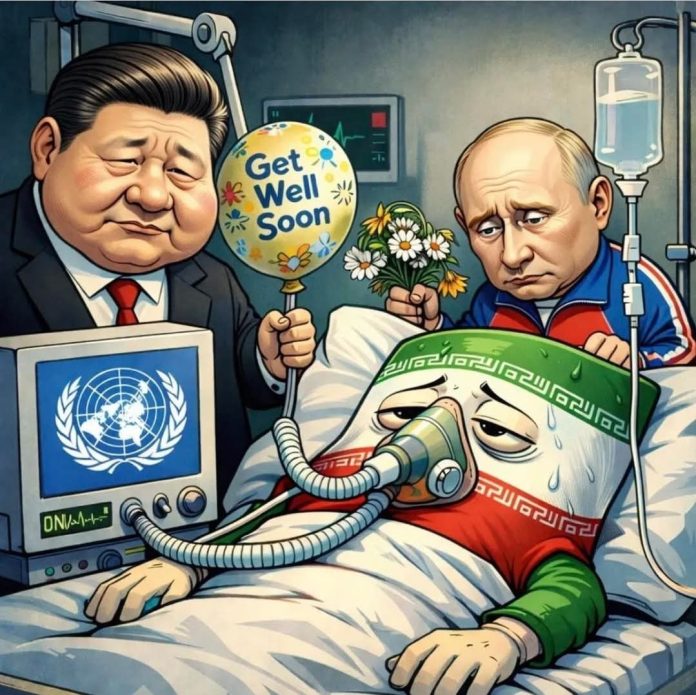
One should not be discouraged by the current stagnation in the arena of street struggles. The current situation in Iran is what analysts call a “state of widespread revolution in the midst of tyranny.”
-What makes Iranian civil struggles different and difficult?
It should not be forgotten that the struggle against a regime that maintains power through systematic violence is one of the most difficult challenges a society can face. History shows that defeating a brutal tyranny rarely happens through a single event, but rather through the erosion of the regime’s pillars of support.
When the cost of street protests is death, resistance often moves to the realm of symbolic persistence. This shows the regime that they may control the streets, but they cannot control the minds of the people.
Despotisms rely on a “serious” image of absolute power. When you use humor or nihilism, you push the regime to a “dilemma”: if they arrest you for something ridiculous, they will look weak and stupid.
Iran today is at a dangerous but historically very familiar stage: the regime is much weaker than in the past and has irreparably lost its leadership. The solidarity of society is more cohesive than in past uprisings and the definitive break with the regime is about to take shape. Freedom and the return of peace, construction and life in Iran are very close.
*“Kayhan London”, believing in freedom of expression, has provided the “Viewpoint” section to publish the opinions and materials of Persian-speaking writers, analysts and experts, but the responsibility for the published content lies with the author.
KAYHAN.LONDON (Kayhan Institute) was founded by Dr. Mostafa Mesbahzadeh. The first issue of this newspaper was published on June 22, 1942. What makes the fate of this historical newspaper as a national and cultural heritage so important is its parallel life in Iran under the rule of the Islamic Republic and in the free space outside the country.
Whatever the extent of Kayhan’s professional and enlightening role over the past four decades,
 Kayhan London